
Electric heaters are essential tools on job sites, particularly during colder months or when working in enclosed spaces.
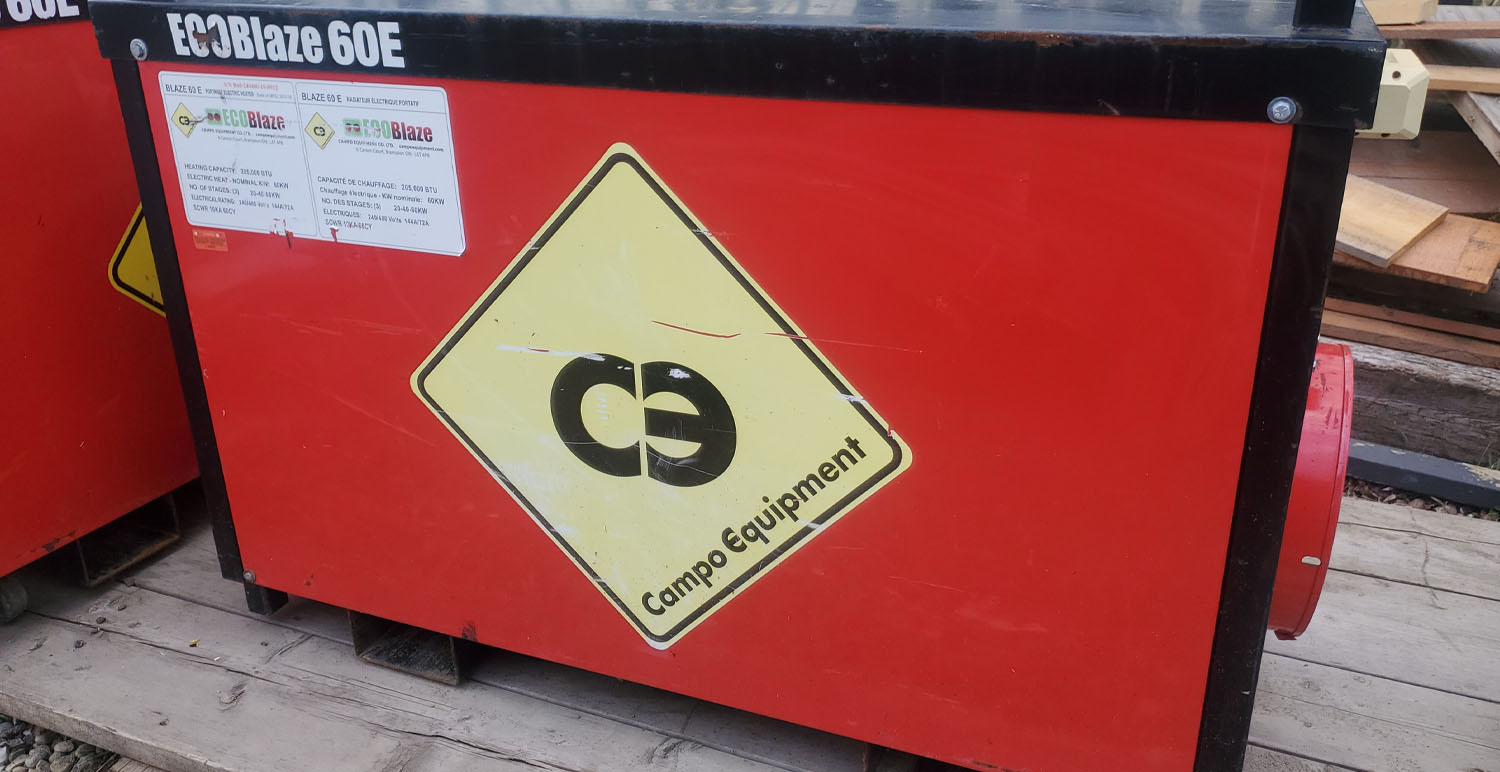
Popular Models: Units like the Patron E9, Campo Blaze 150 E, and Patron 60-E are known for their portability, high output, and rugged design—perfect for construction environments.
Temporary Heating Considerations for Construction Jobsites Temporary heating devices play an important role in working effectively during cold weather. They allow temperature-critical work to continue and provide a more comfortable working environment. Improper selection and use however, can lead to worker injury or property damage from burns, carbon monoxide poisoning, oxygen deficient atmospheres, fires or explosions. Though numerous models are available from various manufacturers; they fall into four main categories: Direct-fired, Indirect-fired , Direct-fired heating devices are typically referred to as ‘salamanders’ or ‘torpedoes’. This is the most common type of heating device used in the construction industry in North America. Typically fueled by propane or diesel, natural gas or kerosene may be used as well. These units operate by pulling air from the room being heated directly across an open flame and forcing it back into the room. The main advantage of these units is that being direct-fired they are almost 100% efficient. This makes them inexpensive to operate and radiant heat models do not require electricity. This is a key consideration during the early stages of construction when temporary electrical service may not be available. Several drawbacks are associated with these units, however. Since they use room air for combustion, they can deplete the oxygen level in the room and the carbon monoxide produced during combustion can accumulate to toxic levels making the work area unsafe for workers. For these reasons, adequate ventilation must be provided when these units are used. In addition, adequate clear space must be maintained between the unit and combustible materials to prevent the open flame from igniting these materials. A growing trend in the construction industry is the use of indirect-fired heaters. These are typically natural gas, propane or diesel-fired heaters located outside the building. The fuel is burned in an enclosed combustion chamber that draws the combustion air from outside the building. The flame heats a heat exchanger which indirectly warms outside air that is fan-driven into the building via air ducts. These ducts can be placed as needed to distribute warm air throughout the work area. These units require electricity to run and they are not as efficient as direct-fired units. However, these drawbacks are generally outweighed by the increased safety they provide. The burner and fuel source is located outside the building, reducing the likelihood of a fire. Also, they provide fresh air to the work area, thus reducing concerns for carbon monoxide and oxygen level depletion. Consider worker and fire safety when using temporary heating on jobsites.
Electric heaters are the third type and their use is growing in popularity. These may be forced air or radiant, with the forced air units being referred to as ‘salamanders’ as well. Their operation is simple. Electricity passes through a resistive coil producing heat. A fan draws room air across the coil transferring heat to the air, which is then forced back into the room; or the heat from the coil simply radiates into the room. The advantages of electric units are that they provide clean heat with no emissions, are simple to maintain and do not require fuel to be stored on site. The drawback is that they require electricity, which may not be available in the early stages of a project and which can be expensive.
In Canada, their use on building construction sites is covered by the Occupational Health and Safety Regulations under the Canada Labour Code, SOR/86-304 part 2.17. All heating devices should be CSA (Canadian Standards Association) or UL listed, regardless of whether they are used in the U. S. or Canada.
In addition, all devices should be used and maintained per manufacturer specifications. Considering worker and fire safety, temporary heating devices are listed below from least to most hazardous:
1. Electric radiant or forced air heating units: These units should be equipped with high limit cut-offs, tip-over switches and be UL listed.
2. Indirect-fired heating unit located outside the building, either natural gas or diesel: Natural gas is best if the service line has been installed for the site. This allows for hard-pipe connections of the fuel source to the heating unit.
Diesel fuel reduces the likelihood of fire due to its lower combustibility when compared to tanked gases. The units should be CSA, Canada/U.S. listed. 3. Direct-fired, propane or natural gas: Adequate clear space should be maintained from all combustible materials. The units should be equipped with tip-over safety switches and installed on a non-combustible floor. As an added measure, these units should be secured to prevent tipping and should be caged to prevent persons or combustible materials from coming into contact with the hot surfaces. Gas storage cylinders should be located outside the building, secured from tipping and protected from vehicular traffic. The units should be CSA, Canada/U.S. listed as well.
Shop Heaters